Travel Umbrella Buying Guide: What Fits in a Carry-On and Survives Wind
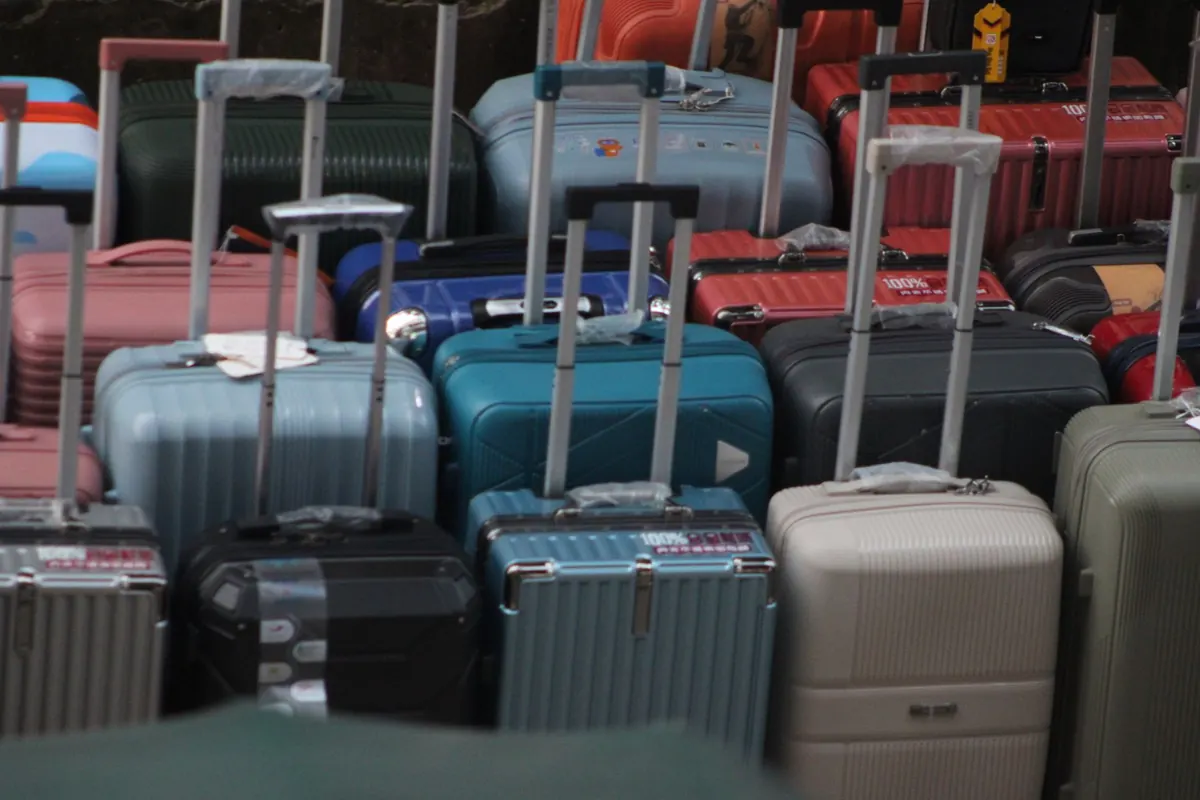
A travel umbrella has three jobs that pull against each other. It has to fold small enough to disappear into a carry-on that is already overpacked, survive a gust that would flip a drugstore model inside out, and stay light enough that you don't regret carrying it through three airports and a train station. Most umbrellas sold as "travel" do one of those well. The trick is knowing which one you're buying before you're standing in the rain.
What follows is the checklist worth running through before you spend money — the measurements that matter, the frame details that decide whether it survives wind, and the small habits that keep it working for years.
An umbrella's folded length is measured from the tip of the ferrule — the little cap at the very top — to the end of the handle, loop included. That number decides where the umbrella can live in your bag, and it is usually printed on the tag, though it's worth checking with a tape measure because a few brands measure to the handle and skip the tip.
Most airlines publish a carry-on limit somewhere around 22 by 14 by 9 inches. Plenty of umbrellas will fit inside that footprint. The problem is packing geometry: a carry-on is rarely empty, and a 23-inch stick umbrella laid diagonally eats the space where your shoes were supposed to go.
Here's how folded lengths generally sort out:
If your plan is to tuck the umbrella into a personal item that goes under the seat, measure that bag's interior first. A side pocket that holds a water bottle will not hold an 11-inch umbrella, and a flat laptop compartment will bulge in a way you'll notice at the gate.
Compact travel umbrellas commonly sit somewhere between 6 and 12 ounces. Six ounces is a pleasure to carry and often a disappointment in wind. Twelve ounces feels noticeable in a day bag but usually comes attached to a frame that won't embarrass you.
The important detail is where the weight is. Mass in the shaft and ribs buys stability. Mass in a chunky rubberized handle buys nothing but fatigue. Pick up two umbrellas of similar overall weight and flex the shaft gently — the one that resists without feeling brittle is the better bet.
Canopy fabric matters less than the frame, but it isn't irrelevant. Tighter weaves shed water faster and hold their shape; thin bargain fabric sags into a bowl that dumps water down your neck. A water-repellent coating helps, though it wears off and can be refreshed with a spray designed for outdoor gear.
Ordinary umbrellas are fine in both carry-on and checked luggage. What draws attention are the novelty versions: umbrellas with a blade or spike hidden in the shaft, and heavy "tactical" models that look like a baton in the X-ray image. Those are the ones that start a conversation you don't want to have at 6 a.m.
A few practical notes for frequent flyers:
Every umbrella label claims wind resistance, and there is no universal standard behind those claims. Ignore the wording and look at the parts.
Fiberglass ribs flex under pressure and spring back. Steel ribs bend and stay bent, and once one goes, the canopy never sits right again. If the product description doesn't say what the ribs are made of, that's usually an answer in itself.
More ribs generally means a rounder, more stable canopy. Eight is common and adequate. Ten or more spreads the load across more contact points, which is one reason larger storm umbrellas often look like a dome rather than a hexagon.
A double-canopy or vented design leaves a gap between two layers of fabric. Wind pushes through the gap instead of filling the canopy, which is what causes the classic inside-out flip. It's the single most useful feature for anyone who walks city blocks in bad weather.
Then look at the joints where ribs meet the stretchers. A riveted connection outlasts a stitched one. Auto-open mechanisms are convenient, but they add springs and tension to a structure that already has enough moving parts — and when the mechanism fails, the umbrella is finished. If you want reliability over convenience, a manual open is not a downgrade.
In a shop, you can test a lot in ten seconds: open it, hold the handle, and press the canopy firmly against your palm. A good frame gives and returns. A bad one creaks, and you can feel the ribs trying to leave their sockets.
Dry an umbrella fully open before you fold it. Storing it damp is how canopies get mildew and how the mechanism starts to seize. In a hotel room with no space, hang it from the handle over a chair back or the shower rail and let it drip.
When you do fold it, follow the original creases rather than fighting them; the fabric has a memory, and working against it wears the coating. If the shaft starts to stick, a dry silicone lubricant applied sparingly does the job. Oil attracts grit, which is the last thing you want inside a telescoping tube.
For travel, a lightweight stuff sack or even a plastic bag solves the wet-umbrella-in-a-dry-bag problem. And if a rib pops out of its socket, don't force the mechanism to close. Push the rib back into the notch by hand first, then collapse the shaft.
Buy for the bag you actually carry. If you live out of a personal item, a 7- to 8-inch umbrella with fiberglass ribs and a vented canopy is the right answer, and you'll accept a smaller canopy to get it. If you travel with a roller bag and do a lot of walking, a slightly heavier 10- to 12-ounce model with ten ribs will pay you back on the first windy afternoon.
Two umbrellas is not excessive for a frequent flyer: a featherweight one that lives permanently in the laptop bag, and a sturdier one for the trip where weather is the point. Test the frame with your hands before you pay, dry it open when you get home, and a good travel umbrella will outlast several cheap ones that seemed like a bargain at the time.
Photo: Jahra Tasfia Reza / Pexels
Previous Post
How to Match Umbrella Colors to Your Raincoat
Next Post
Clear Umbrellas and Rainy Day Outfits: 5 Photogenic Pairings